Not Every Hobby Is Meant for You. Here’s Why.
Not Every Hobby Is Meant for You. Here’s Why.
You Might Be Choosing the Wrong Hobby for Your Personality
by Kira Sison

I thought I wasn’t a hobby person.
I can literally stay home for days without the sun touching my skin and be perfectly happy about it. I genuinely enjoy being alone. Give me a good movie or series to watch, a book I can get lost in, and nowhere I need to be, and I’m good.
And then I realized:
Isn’t that a hobby?
Turns out, I wasn’t someone without hobbies.
My idea of what counted as a hobby was just too narrow.
Because when we hear the word “hobby,” we tend to picture hands-on activities.
Running. Painting. Pottery. Cycling. Crochet. Gardening. Pickleball.
Something you actively do.
Meanwhile, spending an entire afternoon curled up with a book or getting completely invested in a series can feel like you’re just… staying home.
That might be part of the problem.
We’ve created this picture of what having a hobby is supposed to look like, and sometimes the things we already genuinely enjoy don’t make the cut.
But that realization made me curious about people who say the same thing I used to say:
“I’m just not a hobby person.”
Are there really people who simply don’t enjoy hobbies?
Or have they just been trying the wrong ones?

Maybe You Just Haven’t Found Your Thing Yet
Think about how we usually discover hobbies as adults.
Your friend starts running, so you try running.
Everyone suddenly seems to be playing pickleball, so you buy a paddle.
Your feed becomes full of people making pottery, so one Saturday you find yourself sitting behind a spinning lump of clay thinking, Maybe this is who I am now.
Then three weeks later, you stop.
And sometimes we interpret that as failure.
Maybe I get bored too easily.
Maybe I can never stick to anything.
But what if none of those conclusions is necessarily true?
When I asked Chryz Thinks, a Body Optimization Expert, about people who claim they’re simply “not hobby people,” she had a very different answer:
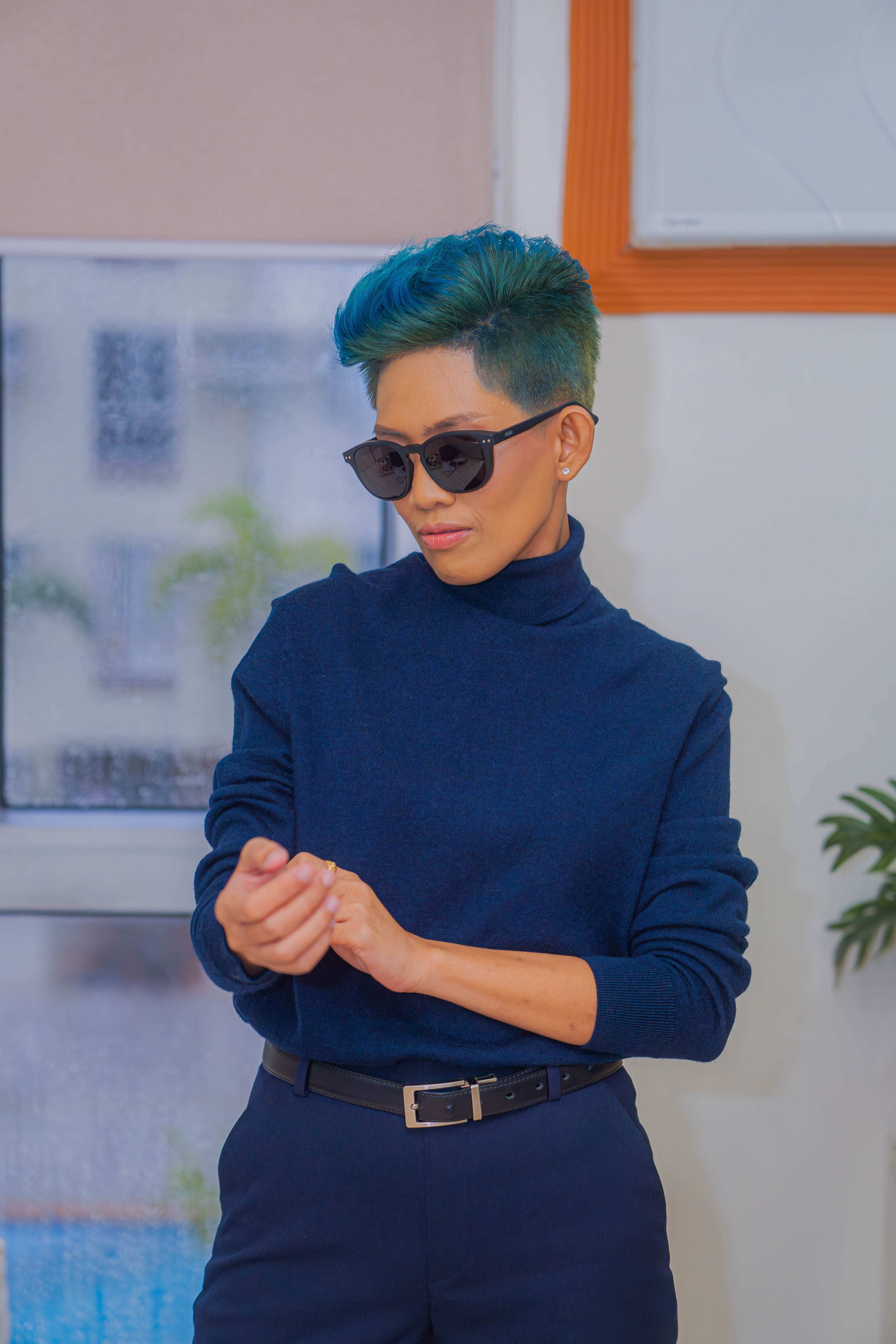
“There is no such thing as a person with no hobby. There is only a person who has not yet found the right one.”
According to Chryz, the problem may have less to do with discipline and more to do with what she callsalignment.
And this is where the conversation gets interesting.
Because Chryz doesn’t only look at personality questionnaires to understand what might suit someone.
She looks at the body.
Literally.
Yes, with consent.
And with your clothes on, of course.
What could your body possibly know about your hobbies?

Chryz works with a framework in which physical characteristics and body measurements are used to interpret patterns in how a person thinks, learns, creates, socializes, handles stress, and restores energy.
She believes these patterns can offer clues about what she calls a person’s “natural genius.”
And, according to her, they may also offer clues about why certain hobbies feel energizing to one person and exhausting to another.
“The hobbies you’re drawn to aren’t random either,” Chryz explains. “They’re clues pointing back to how you’re built.”
It’s a fascinating claim.
And whether or not you’re convinced by the idea, it does raise an interesting question:
Why can the exact same activity feel relaxing to one person and completely unbearable to another?
Because maybe there isn’t such a thing as a universally fun hobby.
Then why do some activities become obsessions?
You probably know someone who tried something once and suddenly developed an entire new personality around it.
They went running.
Then they bought running shoes.
Then a smartwatch.
And now you’re receiving screenshots of their Strava activity at 6:12 in the morning.

What happened?
Chryz describes this as alignment. When an activity fits the way someone naturally operates, she says, returning to it requires less forcing.
You don’t have to convince yourself to keep doing it.
You just look at the clock and somehow three hours have passed.
Ha?
Of course, the activity itself still matters.
If something is too easy, you get bored. If it’s overwhelmingly difficult, you get frustrated.
But when it challenges you enough to hold your attention while still feeling possible, that’s when it can become absorbing.
And sometimes, the hobby itself isn’t even the problem.
You didn’t hate running. You hated running alone.
You might not hate exercise. You might just hate gyms.
You might not hate social hobbies. You might just hate huge groups.
Or, like me, you’ve gone on so many solo dates and gotten so used to enjoying your own company after being single for too long.
Awww…
Where are my single sexy people at?
How do you know when a hobby fits?
Chryz suggests paying attention to what happens to your energy.
Do you find yourself thinking about the activity when you’re not doing it?
Do you feel more like yourself while you’re doing it?
They’re simple questions, but they’re interesting things to notice.
I’d add another:What kind of tired does it give you?
Because I’m not completely convinced that the “right” hobby should always leave us with more energy than we had before.
Try telling that to someone after boxing.
Or a marathon.
Or three hours of dancing.
You can be physically exhausted and still think, That was amazing.
There’s a difference between:
I’m tired because I never want to do that again.
and
I’m tired. When are we doing that again?
The goal doesn’t have to be finding a hobby that never tires you out. It’s finding one that makes
the effort feel worth it.
Why do we take hobbies so seriously?

Adults have a strange tendency to treat trying something new like we’re applying for a permanent identity.
We haven’t even finished the beginner baking class and somebody is already saying:
“Uy, ibenta mo ’yan!”
You start painting and wonder whether you’re talented.
You start running and immediately research the proper shoes, watch, training plan, race calendar, and whether you’re now technically a “runner.”
You try pottery once and suddenly feel pressure to decide whether pottery is for you.
What if you didn’t have to know yet?
What if a hobby could just be something you tried on a Saturday?
No career plan.
No monetization strategy.
No requirement to become impressive at it.
Just:
“Gusto ko lang subukan.”
Or, fine.
“My crush invited me to try this.”
Yieeee!
So what if you genuinely don’t know what you enjoy?
You could study your personality.
You could think about whether you prefer competition or cooperation, solitude or community, repetition or novelty, physical movement or quiet concentration.
According to Chryz, you could even look for clues in your body.
Any of those could give you somewhere to begin.
But there’s one thing no personality assessment, body measurement, research paper, or article like this can do for you:
Eventually, you still have to try the thing.
Because we aren’t always good at predicting what we’ll enjoy.
The activity that seems perfectly suited to your personality might bore you.
The thing you were convinced you’d hate might become the reason you’re excited for Saturday.
And trying something new doesn’t reveal your “hidden genius.”
Sometimes it reveals:
“Ay. Hindi talaga para sa akin.”
That’s useful information too.
Perhaps finding hobbies isn’t about discovering the one activity you were biologically destined to do.
Maybe it’s closer to collecting clues about yourself.
What makes you curious?
What kind of challenge keeps you interested?
When do you want people around you?
What do you keep wanting to try even though you have absolutely no evidence you’ll be good at it?
I used to think staying home, watching movies and series, and getting lost in books meant I wasn’t a hobby person.
Turns out, I already had hobbies. And lately, I’ve been discovering that enjoying your own company doesn’t mean you have to stay home either.
You can try a sport.
Take a class.
Make something badly.
Show up alone.
Be embarrassingly new at something.
Then try something else.

That’s also part of why we’re building Hobbet.
Not because everyone needs to find the perfect hobby.
But because there are still so many things we haven’t tried yet.
Some will become part of our lives.
Others will just make one Saturday more interesting.
Both sound pretty good to me.
There’s really only one way to find out.